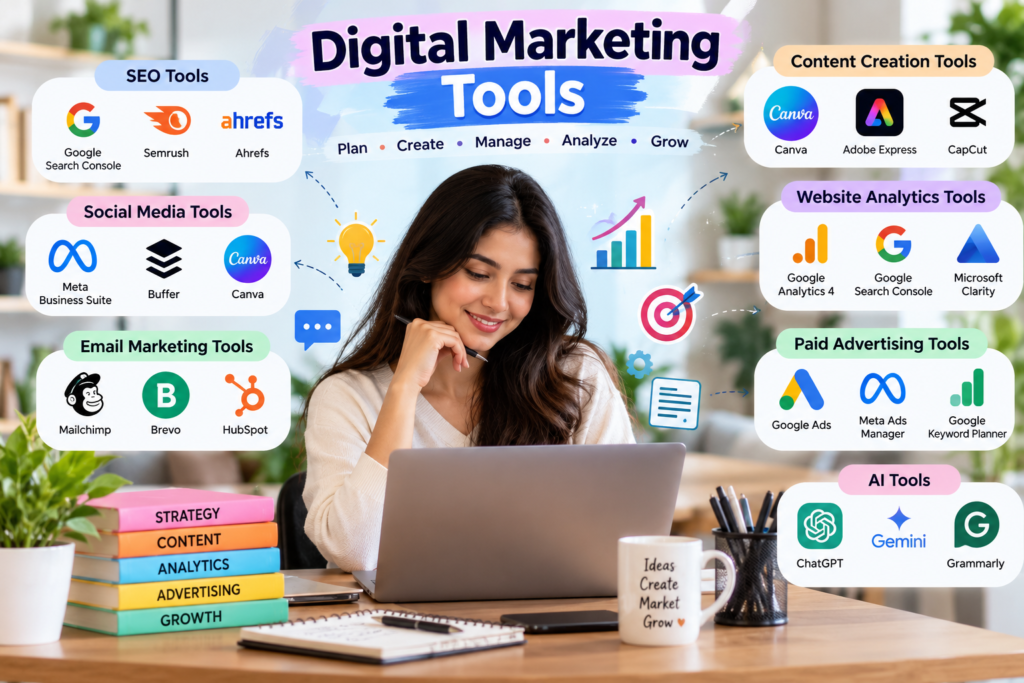
Digital Marketing Tools: A Complete Guide to Growing Your Business Online
Introduction In today’s digital world, businesses need more than just a website to succeed online. They need effective strategies, creative content, and the right digital marketing tools to reach their target audience. Digital marketing tools help businesses improve their online presence, attract potential customers, increase website traffic, and measure marketing performance. Whether you are a beginner, a freelancer, or a business owner, using the right tools can make your marketing activities easier, faster, and more effective. From search engine optimization (SEO) to social media marketing and email campaigns, digital marketing tools support almost every aspect of online promotion. In this blog, we will explore the most useful digital marketing tools, their benefits, and how you can use them to grow your business. What Are Digital Marketing Tools? Digital marketing tools are software applications and online platforms that help marketers plan, execute, manage, and analyze their marketing activities. These tools simplify tasks such as keyword research, content creation, social media scheduling, paid advertising, email marketing, and website analytics. For example, a digital marketer can use Google Analytics to understand website traffic, Canva to create social media graphics, and Google Search Console to monitor a website’s performance in search results. By choosing the right tools, businesses can save time, make data-driven decisions, and create more effective marketing campaigns. 1. SEO Tools Search engine optimization (SEO) helps websites rank higher in search engine results and attract organic traffic. SEO tools help marketers identify relevant keywords, analyze competitors, monitor website performance, and discover opportunities to improve rankings. Popular SEO tools include: These tools are especially useful for businesses that want to increase organic traffic and improve their visibility on search engines. 2. Social Media Marketing Tools Social media platforms allow businesses to connect with customers, build brand awareness, and promote their products or services. Social media marketing tools help marketers create content, schedule posts, manage multiple accounts, and analyze engagement. Popular social media tools include: Using these tools, marketers can maintain a consistent posting schedule and better understand what type of content their audience enjoys. 3. Email Marketing Tools Email marketing is an effective way to communicate with customers, promote offers, share updates, and build long-term relationships. Email marketing tools help businesses create campaigns, manage subscriber lists, automate messages, and measure results. Popular email marketing tools include: For example, an online store can send welcome emails to new subscribers and promotional emails to customers who have agreed to receive marketing messages. 4. Content Creation and Graphic Design Tools High-quality content plays an important role in digital marketing. Attractive visuals, engaging videos, and informative articles can help businesses communicate their message and capture audience attention. Useful content creation tools include: These tools are useful for digital marketers, content creators, and freelancers who want to produce professional-looking content efficiently. 5. Website Analytics Tools Website analytics tools help businesses understand how visitors interact with their websites. They provide information about traffic sources, user behavior, engagement, and conversions. Popular website analytics tools include: By analyzing this data, businesses can identify which marketing channels perform well and improve pages that are not meeting their goals. 6. Paid Advertising Tools Paid advertising helps businesses reach specific audiences through sponsored placements on search engines and social media platforms. These tools allow marketers to create campaigns, manage budgets, target audiences, and measure advertising results. Popular paid advertising tools include: For example, a local clothing store can run a Meta advertising campaign to reach potential customers in its service area. The business can then evaluate results using metrics such as clicks, conversions, and cost per result. 7. AI-Powered Digital Marketing Tools Artificial intelligence is changing the way marketers research, create, and optimize content. AI-powered tools can assist with brainstorming, drafting, summarizing, analyzing data, and generating creative ideas. Some useful AI tools include: AI tools can improve productivity, but their output should always be reviewed for accuracy, originality, brand voice, and relevance to the target audience. Benefits of Using Digital Marketing Tools Digital marketing tools offer several advantages for businesses and marketers. 1. Save Time: Automation and scheduling features reduce repetitive manual tasks. 2. Improve SEO Performance: SEO tools help identify keywords, technical issues, and opportunities to improve search visibility. 3. Understand Your Audience: Analytics tools reveal how people discover and interact with your website and content. 4. Create Better Content: Design and video editing tools help marketers produce engaging promotional materials. 5. Measure Campaign Results: Reporting features help businesses evaluate performance and make informed decisions. 6. Manage Marketing Activities Efficiently: Multiple tools can help organize campaigns, communication, and reporting. How to Choose the Right Digital Marketing Tools Choosing the right tools depends on your business goals, budget, experience, and marketing strategy. You do not need to use every available platform to succeed. Here are a few factors to consider: Beginners can start with Google Search Console, Google Analytics, Canva, Meta Business Suite, and ChatGPT, depending on their needs. Conclusion Digital marketing tools are essential for businesses that want to build a strong online presence and reach their target audience effectively. From SEO and social media management to email marketing, paid advertising, and analytics, each category serves a different purpose in a complete marketing strategy. The key is to select tools that match your objectives rather than using too many platforms at once. Start with the basics, learn how to use them effectively, and measure your results regularly. With the right combination of digital marketing tools, businesses and freelancers can streamline their work, create valuable content, make informed decisions, and work toward sustainable online growth.